
The Quiet Power of the Collected Vignette
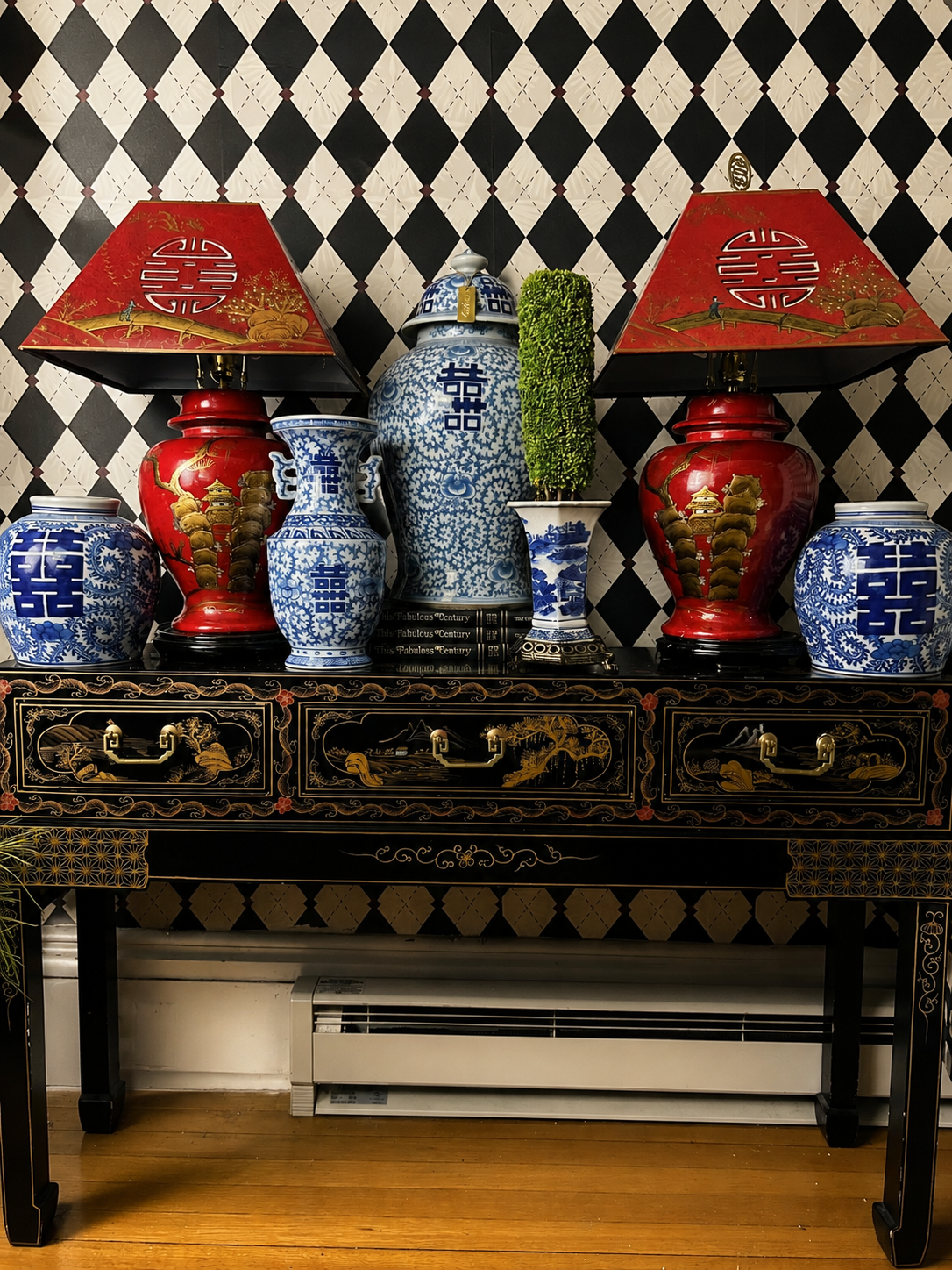
Chinoiserie Vignette - All items can be found in our store
A beautiful room is rarely remembered for its square footage or perfection. What lingers is often something smaller. A corner glowing in afternoon light, a weathered brass candlestick beside a stack of linen-bound books, the quiet intimacy of objects that seem to know one another.
This is the power of the vignette.
In interior design, a vignette is not simply decoration. It is atmosphere distilled into a single moment. A visual sentence composed through texture, memory, age, and restraint. And nowhere does a vignette feel more compelling than when built with vintage and antique pieces.
New objects can fill a room. Old objects give it a pulse.
In the image above, the layered arrangements feel almost theatrical in their richness. Lacquered chinoiserie furniture, porcelain ginger jars, ornate brass candelabras, hand-painted lamps, and richly patterned walls work together like characters within a story. Nothing feels accidental, yet nothing feels overly polished either. The rooms breathe through contrast and collection.
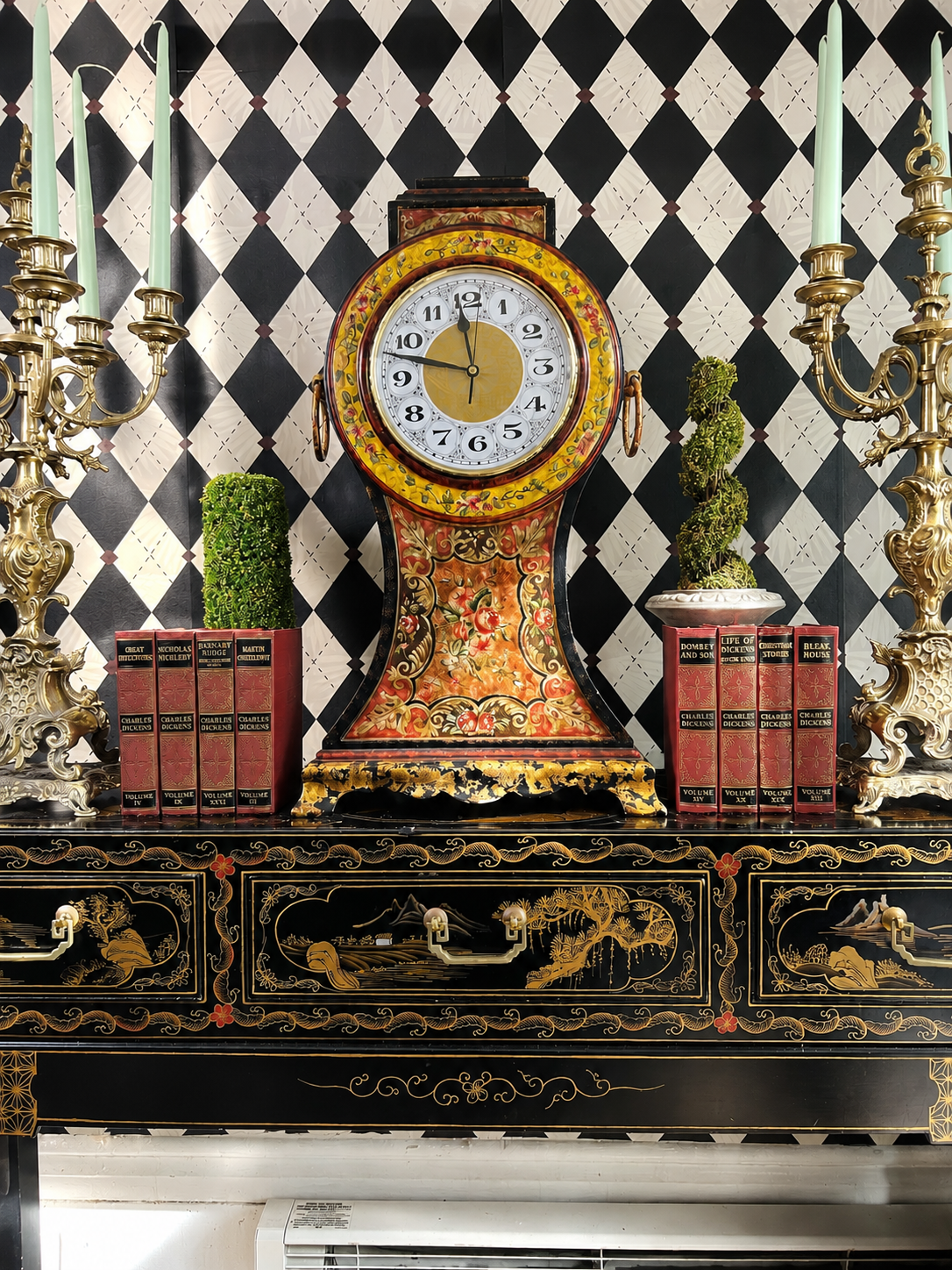
What makes these vignettes so captivating is their sense of inheritance. The porcelain jars feel discovered instead of styled. The painted clock appears almost folkloric, as though it has measured decades quietly in the corner of an old house. Even the smallest details worn book spines, patinated metal, tiny imperfections in glaze and lacquer soften the composition and give it emotional gravity.
A vignette built from collected objects invites pause.
It slows the eye. It suggests a life that has unfolded thoughtfully over time instead of being assembled in a single afternoon.
The most memorable interiors rarely rely on matching décor. They create conversation between eras, materials, and silhouettes.
Here, symmetry is used beautifully without becoming rigid. The twin red lamps create structure, while the varying heights of porcelain vessels and clipped topiary introduce movement. In the second arrangement, the oversized clock becomes the anchoring object. Dramatic, decorative, and grounded by stacks of weathered books and candlelight.
There is also something deeply luxurious about visible age.
Modern interiors often prioritize perfection: flawless stone, pristine upholstery, seamless finishes. Yet rooms that feel soulful usually contain elements untouched by uniformity. Patina becomes a kind of visual memory. Tarnish, fading, crackling paint, softened edges. These are the details that make a room feel lived within instead of merely designed.
The secret, however, is restraint.
Collected interiors are not about filling every surface. The beauty lies in allowing each object enough breathing room to be noticed. A single antique vessel beside stacked books can feel more powerful than an overcrowded arrangement. Negative space gives old objects dignity.
Designers often speak about “visual rhythm,” and vignettes are where rhythm becomes deeply personal. A dark lacquered cabinet grounds the arrangement. Glossy ceramic reflects light. Brass introduces warmth. Greenery softens the composition with organic movement. Together, the objects begin speaking a quiet aesthetic language.
Perhaps this is why vintage vignettes feel so emotionally resonant. They resemble memory itself. Layered, sensory, slightly imperfect.
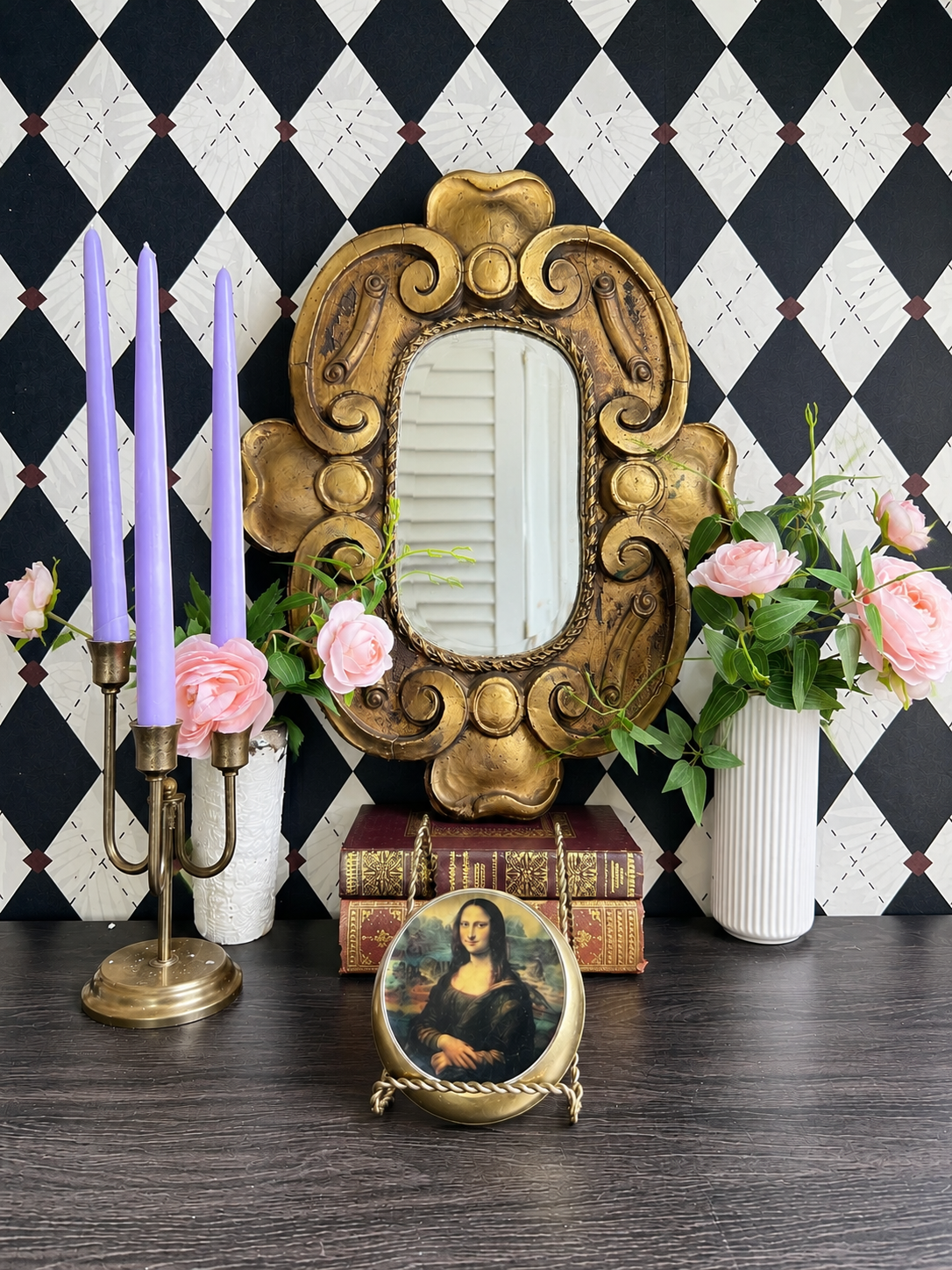
You do not need rare antiques or a grand estate to create this feeling at home. Often the most affecting arrangements come from ordinary objects with visible age: a thrifted brass bowl, handwritten postcards, faded hardcovers, a chipped ceramic vase, a framed painting discovered in an antique market. Beauty emerges through composition and atmosphere, not value alone.
A well-crafted vignette quietly transforms a room from functional to soulful.
It tells visitors something without announcing it. It suggests curiosity, sentiment, restraint, and reverence for objects that endure. More importantly, it creates moments of stillness within the home. Corners that invite lingering instead of rushing past.
And perhaps that is the true luxury of antique design.
Not perfection.
Presence.
